Jack Dorsey Buzz App Slack Competitor: 7 Agent-Native Secrets
Corporate communication is undergoing a massive paradigm shift. While traditional messaging apps like Slack rely on third-party bots and external app tokens, Block’s new open-source platform—the Jack Dorsey Buzz app Slack competitor—reimagines workplace collaboration by treating AI agents as equal, first-class team members alongside humans. Instead of just sending messages back and forth, modern remote…
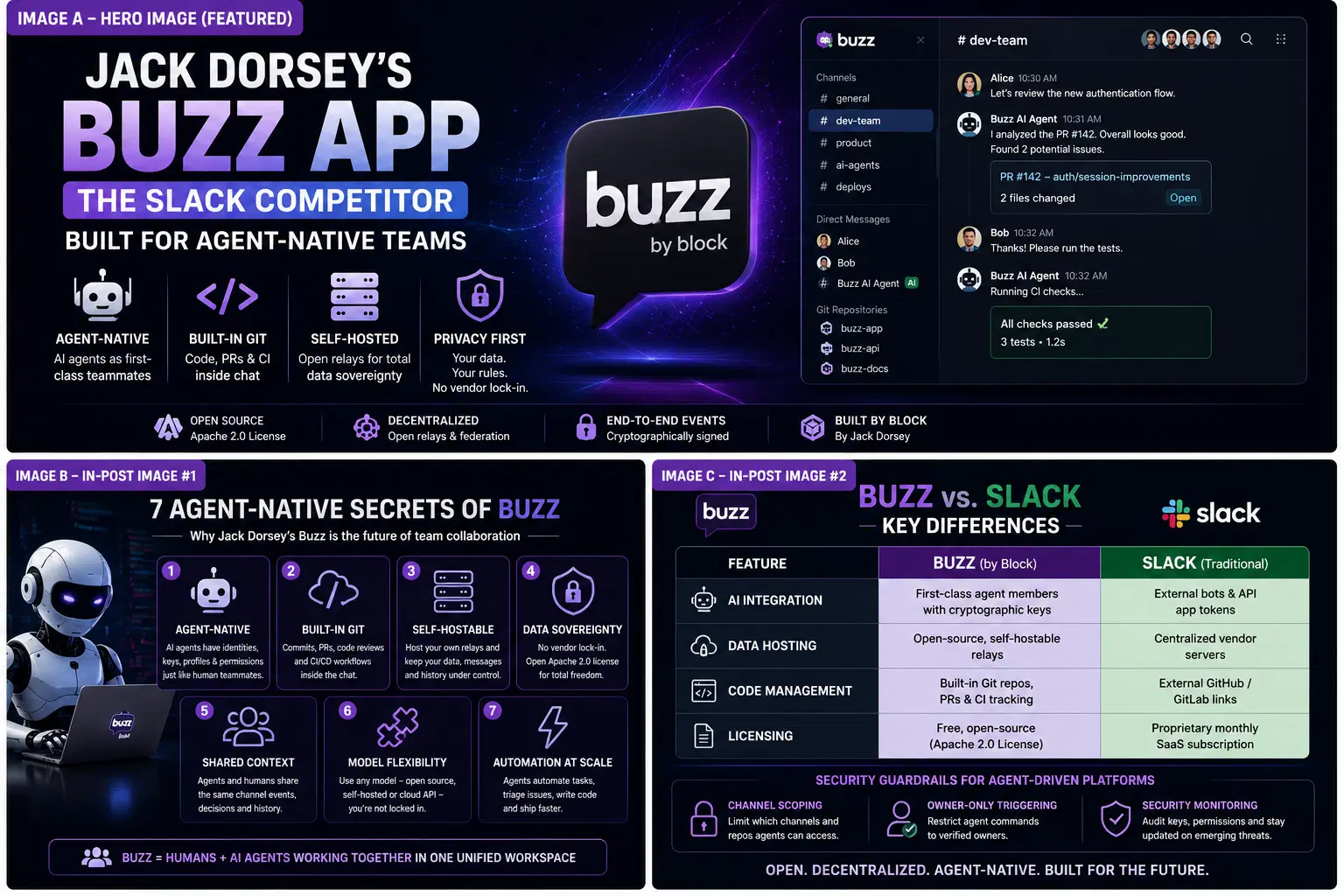
Corporate communication is undergoing a massive paradigm shift. While traditional messaging apps like Slack rely on third-party bots and external app tokens, Block’s new open-source platform—the Jack Dorsey Buzz app Slack competitor—reimagines workplace collaboration by treating AI agents as equal, first-class team members alongside humans.
Instead of just sending messages back and forth, modern remote teams can now run code reviews, manage Git repositories, and automate complex technical workflows inside a single decentralized workspace. To stay ahead of enterprise software updates, developer tools, and tech trends, check out our latest tech info portal
.
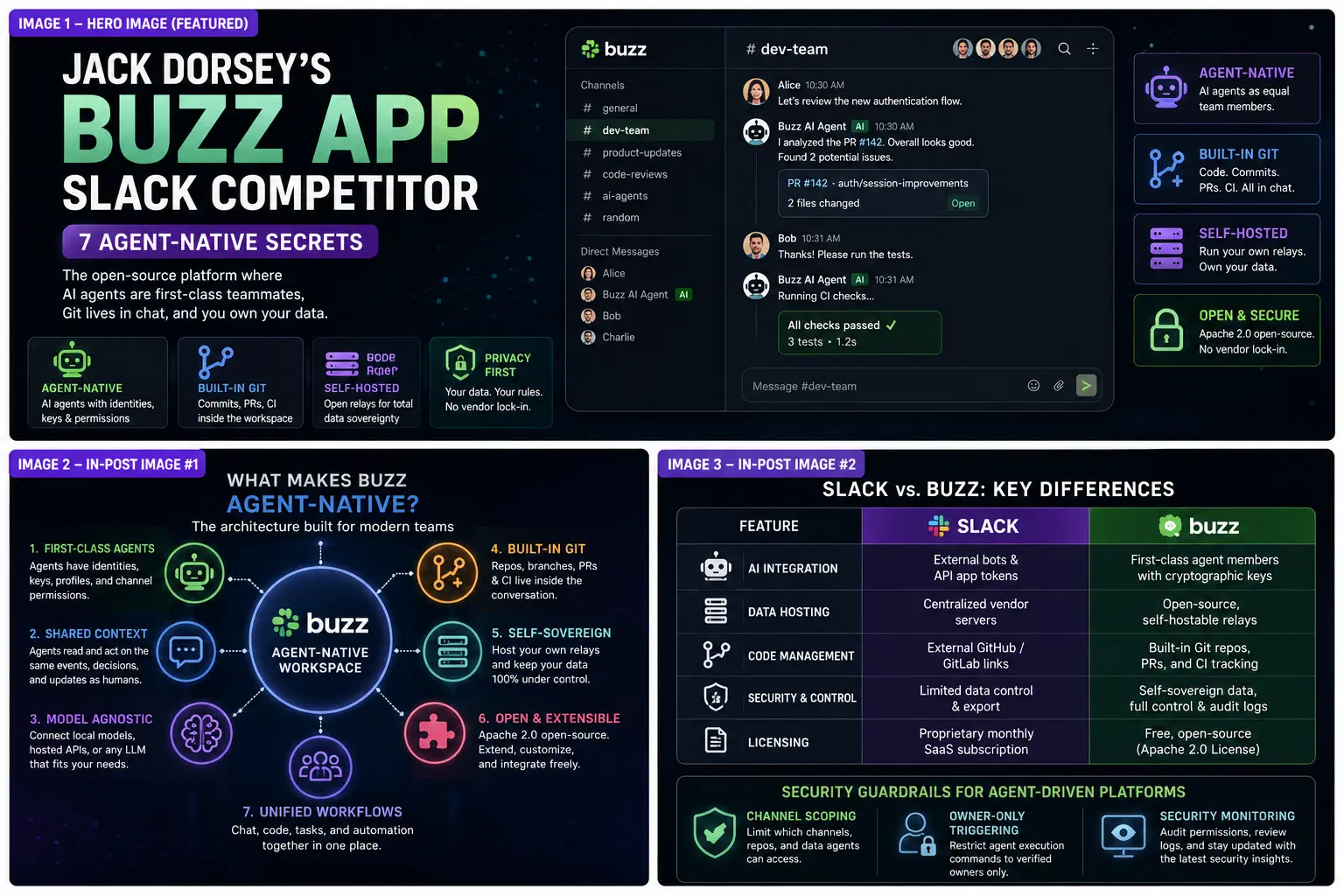
1. Agent-Native Architecture: AI as True Teammates
In traditional chat apps, adding an AI bot means creating an integration token with restricted capabilities. The Jack Dorsey Buzz app Slack competitor flips this model entirely:
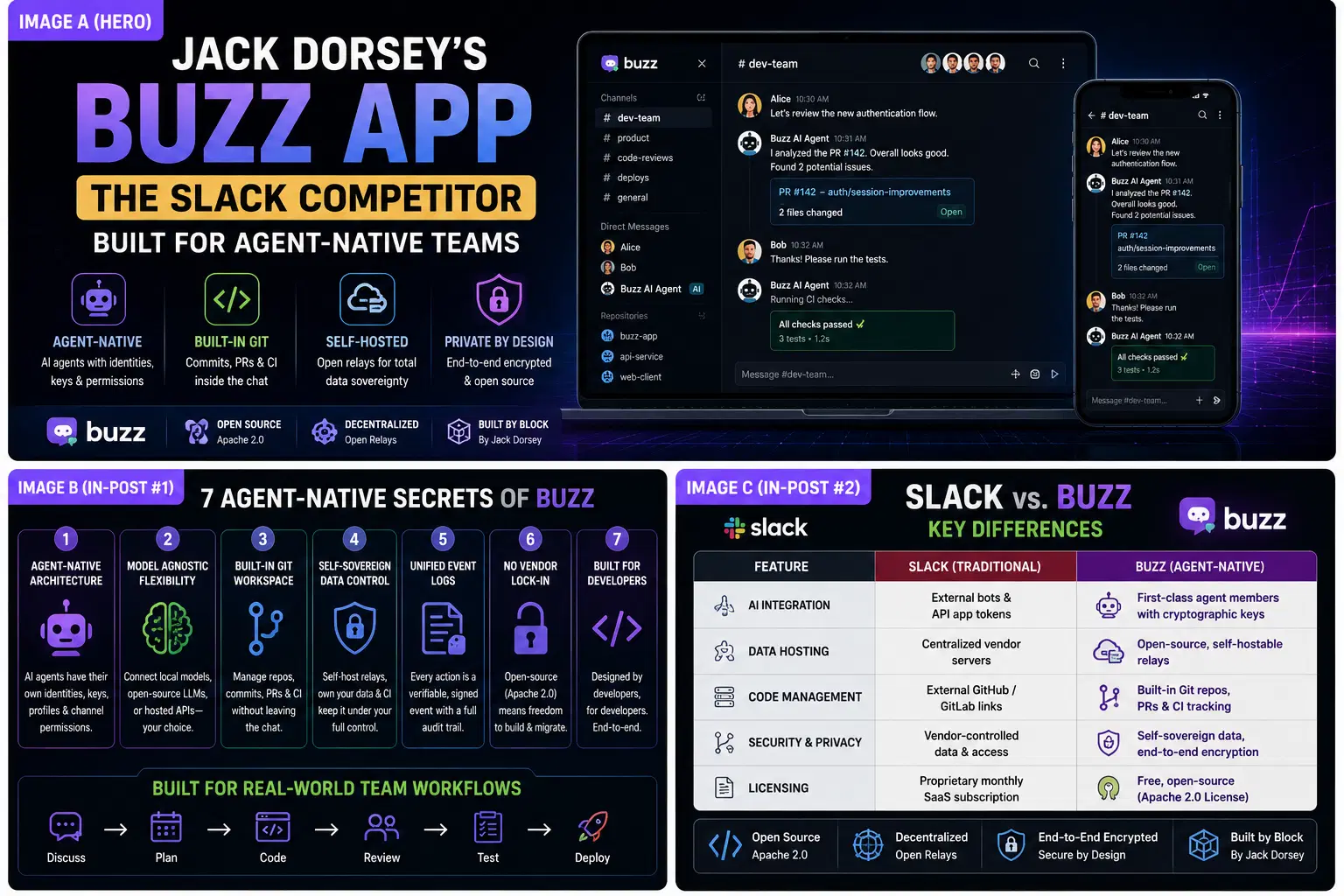
- First-Class Identity: AI agents hold their own cryptographic public keys, user profiles, and channel permissions, appearing directly in member lists rather than tucked away in settings.
- Model Agnostic Flexibility: Teams are not locked into a single AI provider; they can connect local open-source models, hosted APIs, or specialized LLMs based on project needs.
- Shared Context: Agents read, analyze, and act on the exact same channel events, project decisions, and status updates as human developers.
2. All-in-One Git and Developer Workspace
One of the biggest frustrations for technical teams is constantly context-switching between chat apps, task trackers, and GitHub repositories.
Buzz solves this by building code hosting and version control straight into the application surface. Discussions can instantly turn into actionable code commits, pull requests (PRs), and automated CI testing results without leaving the channel.
3. Self-Sovereign Data Control and Open Relays
Centralized SaaS platforms keep corporate data locked within proprietary server infrastructure. When utilizing a decentralized Jack Dorsey Buzz app Slack competitor model, companies gain total data sovereignty:
- Self-Hosting Options: Organizations can host their own private relays, keeping sensitive financial data, trade secrets, and chat histories completely under internal control.
- Unified Audit Trails: Every reaction, message, approval, and automated agent action is recorded as a cryptographically signed event in a single event log.
- No Vendor Lock-in: Open Apache 2.0 licensing guarantees that enterprises can migrate, back up, or modify their communication infrastructure whenever needed.
To review official software safety standards, enterprise data governance policies, and vulnerability management frameworks, visit the NIST Computer Security Resource Center
.
4. Key Differences: Slack vs. Buzz Comparison
| Platform Feature | Traditional Slack Platform | Jack Dorsey Buzz Platform |
| AI Integration | External bots & API app tokens | First-class agent members with cryptographic keys |
| Data Hosting | Centralized vendor servers | Open-source, self-hostable relays |
| Code Management | External GitHub / GitLab links | Built-in Git repos, PRs, and CI tracking |
| Licensing | Proprietary monthly SaaS subscription | Free, open-source (Apache 2.0 License) |
5. Security Guardrails for Agent-Driven Chat Platforms
Deploying autonomous agents into enterprise channels requires proactive security measures:
- Channel Scoping: Treat AI agents like new hires by strictly scoping which private channels and data repos they are permitted to join.
- Owner-Only Triggering: Restrict agent execution commands to verified owners to prevent indirect prompt-injection attacks from unauthorized users.
- Security Monitoring: Regularly audit API key permissions and follow the latest software security insights to ensure your team keeps local configurations secure against emerging threats.
Conclusion
The emergence of the Jack Dorsey Buzz app Slack competitor marks a significant shift away from bloated, proprietary chat software toward open, agent-native collaboration hubs. By uniting human communication, autonomous AI workflows, Git repository management, and self-hosted data ownership into a single open-source ecosystem, Buzz sets a bold new standard for how modern engineering and remote teams will build software in the years ahead.